

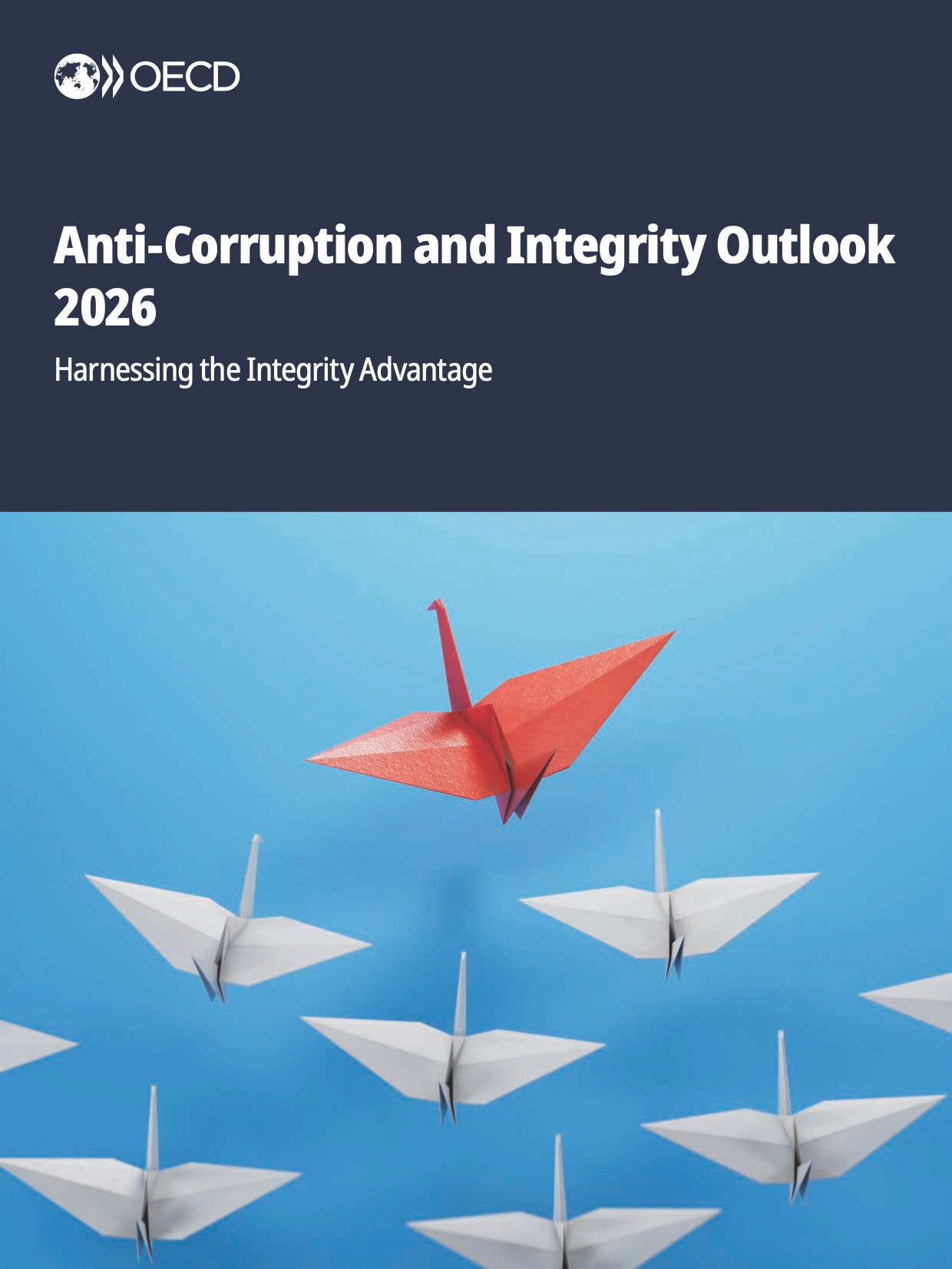
Over time, we have observed how our integrity standards have translated into an advantage precisely because they are applied in environments where integrity is often treated as optional, transactional, risk or compliance-driven.
This year the OECD’s annual Global Anti-Corruption and Integrity Forum (GACIF) in March 2026 convened under the theme of “The Integrity Advantage: Powering Competitiveness and Prosperity”. This was anchored by its flagship Anti-Corruption and Integrity Outlook 2026 report, which reinforces this reality. Integrity is no longer a moral aspiration alone. It is a strategic asset, sustainable business and good governance imperative. When embedded effectively, it strengthens trust, improves market predictability, and creates the conditions for investment and growth. When neglected it risks reputational hazard, stakeholder blind spots and good governance loopholes/deficits.
A key message resonating throughout the Forum was the imperative to treat integrity as governance. This places public affairs firmly within the disciplines of good governance, regulatory coherence, and institutional accountability.
This requires a decisive shift from rules-based compliance to values-based systems.
Rules, while necessary, are inherently limited. As highlighted repeatedly in OECD discussions, rules-based systems become malleable in contexts where enforcement is weak, institutions are fragmented, political will and policy in practice is inconsistent. In such environments, compliance can be conveniently and selectively engineered, bypassed, or applied.
By contrast, a values-based approach embeds integrity into decision-making itself. It informs how organisations assess risk, calibrate strategy, engage stakeholders, unlock value and navigate grey areas where regulation is silent or evolving.
The OECD Due Diligence Guidance reinforces this approach. Integrity must be embedded into policies, management systems, and business relationships, and treated as an ongoing, iterative process rather than a checklist exercise. This distinction is critical.
Across jurisdictions, the evidence is clear that the greatest vulnerability is not the absence of regulation, but the gap between regulation and implementation. The 2026 Outlook identifies this “implementation gap” as the defining challenge for integrity systems globally. This is where the integrity advantage becomes institutionally tangible.
Organisations that internalise integrity, not merely as compliance but as core to strategy, sustainability, value creation and impact, are better positioned to:
· Navigate regulatory uncertainty, geopolitical and political risk
· Anticipate and address policy change and regulatory reform
· Build durable trust with government, investors, and stakeholders
· Compete in markets where transparency and accountability are increasingly demanded
· Anticipate and mitigate integrity risks across value chains
In our experience, particularly across the emerging markets of Africa and the Middle East, integrity is not a constraint and burden on competitiveness. Integrity is an increasingly fundamental precondition for competitive advantage through responsible business conduct, engagement and participation. Combined with systemic leadership integrity enables business ecosystem resilience, operational continuity and market stability.
Institutionalised integrity and instruments enables consistency where institutions themselves may be inconsistent. Integrity creates predictability where policy environments may be fluid.
Integrity builds credibility where trust deficits are high and perceptions influence reality
Ultimately, the integrity advantage is not about avoiding wrongdoing. It is about enabling stronger governance, better decision-making, stronger institutions, and more resilient markets.
This has always been the premise, at ETHICORE Group. Integrity is not what we do in addition to public affairs. It is how we do public affairs.